Tag: EMCA

AI meets Sport: New Horizons from Istanbul

The European Multisport Club Association (EMCA) successfully hosted the international conference AI & (Multi)Sport on Saturday, 27 September 2025, in Istanbul, as part of its Extraordinary Assembly activities in collaboration with Taç Spor.

In his welcome address, Polat Bengiserp, President of Taç Spor, underlined the symbolic importance of hosting the event at the historic facilities of Galatasaray High School, emphasizing how strongly these facilities are connected to the identity and tradition of the club.

In her keynote speech, Christina Tsiligkiri, President of EMCA, highlighted that Artificial Intelligence is no longer a future trend, but part of our reality, stressing that technology is not neutral — its impact depends on how and why it is used. She underlined that for EMCA, AI must not become a luxury for the few, but a tool for all — one that strengthens transparency, equality, inclusion and the social value of sport. She also reminded participants that while AI can support injury prevention, accessibility, and club management, it is crucial to protect personal data, avoid new inequalities, and ensure that technology always serves people, not the other way around.

The conference gathered representatives from multisport clubs, European institutions, and leading experts in technology and sport, to discuss how AI is set to transform the sporting world. Participants explored opportunities for AI to enhance performance analysis, prevent injuries, improve management efficiency, foster inclusion, and create new ways for communities and fans to engage with sport.

A key highlight of the day was the expert panel discussion featuring Ian Smith, Philipp Ostsieker, Stefano Orengo, Peter Kekesi and Malte Kalsbach, who shared their diverse insights on how AI can responsibly and effectively shape the future of sport.

One of the most inspiring aspects of the day was the presence of students from Galatasaray High School, who attended the sessions with enthusiasm. Their participation brought fresh perspectives and reflected the importance of involving younger generations in shaping the future of sport in the digital era.

The conference concluded with a strong call to action: EMCA and its member clubs must continue to embrace digital innovation, share best practices and cooperate across Europe to ensure that technology — and AI in particular — serves as a tool to strengthen inclusion, participation and the social value of sport.

With this conference, EMCA reaffirmed its role as a bridge between sport, technology and society, opening new horizons for collaboration and inspiring both today’s leaders and tomorrow’s athletes.

European Multisport Club Association (EMCA) successfully concludes its General Assembly in Istanbul

The European Multisport Club Association (EMCA) announces the successful conclusion of its General Assembly, held on Friday, 26 September 2025, in Istanbul and hosted by Tac Spor. Under the leadership of EMCA President Christina Tsiligkiri, the gathering marked an important milestone for the Association, reaffirming its mission to promote and support multisport across Europe.

EMCA extends its warm thanks to Tac Spor President Polat Bengiserp and the club’s Secretary, Elif Uzuner, for their hospitality and exemplary organization. As a token of appreciation, EMCA members presented commemorative gifts to Tac Spor’s representatives for their valuable contribution to the event’s success.

The Assembly’s work included a review of 2024–2025 activities, programmes and partnerships, as well as the setting of strategic priorities for 2025–2026, with emphasis on innovation, enhanced member services, and the further development of European collaborations.

EMCA President Christina Tsiligkiri stated: “EMCA is not merely an institution; it is a living network of cooperation, interaction and shared purpose that brings together multisport clubs across Europe. I am particularly pleased to announce that EMCA has been approved to participate in three Erasmus+ programmes, a development that strengthens the organisation’s sustainability and the value we deliver to our members.”

Tac Spor President Polat Bengiserp stated: “For Tac Spor, it was a great honour to host EMCA’s General Assembly in Istanbul. Our city—bridging cultures—reflects the spirit of cooperation that unites us; we warmly thank all members for their trust and look forward to continuing joint initiatives that benefit our clubs and communities.”

Looking ahead, EMCA will build on the momentum of the Assembly, strengthening multisport through collaboration, innovation and steadfast support for its members and partners, with the goal of a more connected and resilient future for sport in Europe. The next General Assembly is scheduled for March 2026 in Spain, at the facilities of Saint Cugat Creix.

Before the start of the proceedings, a minute of silence was observed in memory of the late Hakan Malek, a member of Tac Spor’s Board of Directors. EMCA extends its sincere condolences to his family and to the club.

Prior to the Assembly, participants were given a guided tour of Tac Spor’s facilities, and in the evening an official dinner was hosted for all attendees on Galatasaray’s artificial island on the Bosphorus.

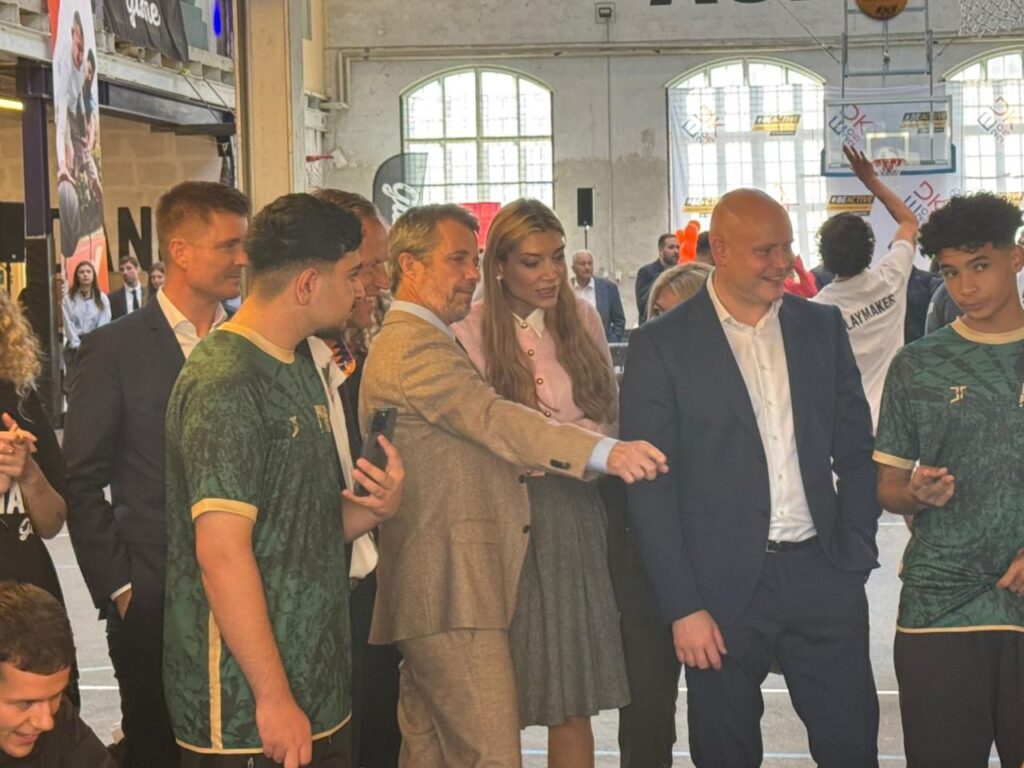
EMCA participates in the launch of the 10th anniversary of the European Week of Sport

The European Week of Sport (EWoS) officially celebrated its 10th anniversary with a high-profile launch event on 23 September 2025 in Copenhagen, Denmark. The opening ceremony took place at GAME Streetmekka, a former storage facility transformed into a modern hub for sport and social inclusion.
The event was inaugurated by His Majesty King Frederik X of Denmark, Mr. Glenn Micallef, Director at DG EAC, and Mr. Jakob Engel-Schmidt, Danish Minister of Sport.

The celebration not only highlighted a decade of EWoS but also showcased the success of the Erasmus+ Sport programme — widely recognised as one of the European Union’s most impactful initiatives in the field of sport and beyond.

Representing the European Multisport Club Association (EMCA), President Christina Tsligkiri, Vice-President Gabriella Bascelli, and Board Member Bojan Mijatović actively participated in the event, reaffirming EMCA’s commitment to promoting multisport values and fostering collaboration across Europe.

On the second day, a Conference addressed key themes such as Physical Literacy, the challenges of sedentary behaviour, and inspiring best practices from successful sport projects across Europe. Discussions underlined the unifying power of sport, even in times of conflict.

Moving examples included initiatives supporting Ukrainian children and schools, proving how sport can help rebuild a sense of belonging to a democratic and inclusive European community despite the ongoing horrors of war.

EMCA, President Christina Tsligkiri stated:

“As President of the European Multisport Club Association (EMCA), I strongly believe that sport has the power to unite. For us, the European Week of Sport is a key initiative that promotes health, inclusion, equality, and active citizenship across every corner of Europe. Sports clubs, organisations, volunteers, and young people are at the heart of this effort — and EMCA is here to support, coordinate, and inspire actions that will have a lasting impact.

From Copenhagen, we send a pan-European message of both physical activity and awareness. Sport is not only about stars; it also holds the path that leads to them.”

The EMCA’S AI & (Multi)Sport Conference and Extraordinary Assembly to be held in Istanbul, Turkey

The European Multisport Club Association (EMCA) announces that the international conference AI & (Multi)Sport will take place in Istanbul, Türkiye, on Friday, 26 September 2025, hosted by the renowned sports club Taç Spor. In parallel, EMCA’s Extraordinary Assembly will also be held.

The conference will bring together experts, academics, and representatives of multisport clubs from across Europe. It will be an important occasion to explore how artificial intelligence can transform the world of sport, present innovative initiatives, and strengthen the unity of the European multisport movement.

EMCA’s growth and vision

Since its establishment, EMCA has grown steadily, expanding its network of member clubs and giving them a stronger collective voice at the European level. Headquartered in Brussels, the Association actively participates in European projects, collaborates with institutions and partners, and promotes innovation, sustainability, and inclusion in sport.

At the March 2025 Assembly in Piraeus, Greece, a new Executive Board was elected, new committees were formed, and important decisions were taken to reinforce EMCA’s governance, sustainability, and organizational structure. These steps reflect EMCA’s determination to serve as a driving force for multisport clubs across Europe.

Why Istanbul matters

Choosing Istanbul and Taç Spor as the host highlights EMCA’s commitment to fostering cooperation among clubs of diverse cultures and backgrounds. The AI & (Multi)Sport conference will serve as a milestone in EMCA’s journey, providing a platform for members and experts to exchange experiences, share best practices, and collectively shape future initiatives.

In parallel with the conference and Assembly, additional activities will be organized under the EMCA Connect framework, aiming to strengthen member engagement, showcase innovative ideas, and create new opportunities for collaboration.

Statement by the President Ms. Christina Tsiligkiri:

“By focusing on AI and its impact on sport, EMCA is taking a bold step into the future,” said EMCA President Christina Tsiligkiri. “This conference will not only open new horizons for our clubs, but also confirm our commitment to innovation, cooperation, and the sustainable growth of the European multisport movement. Istanbul will be the place where ideas meet practice, and where we collectively explore how technology can enhance values such as inclusion, fair play, and solidarity in sport. We strongly believe that the dialogue we begin here will inspire new initiatives and long-lasting partnerships for the benefit of the entire European sporting community.”

EMCA Actively Participates in the Launch of the Sport Transparency Index in Brussels

Brussels, 18 June 2025 – The European Multisport Club Association (EMCA) proudly participated in the official launch of the Sport Transparency Index, a pioneering initiative led by the Sport Integrity Global Alliance (SIGA) and co-funded by the European Union’s Erasmus+ Sport programme.

Held at the Vrije Universiteit Brussel, the event gathered stakeholders from across Europe’s sport ecosystem to discuss the need for measurable transparency and stronger governance in sport organizations. EMCA was notably represented on the panel “The Benefits of Publicly Evaluating Transparency and Good Governance in Sport”, featuring:

Christina Tsiligkiri, President of EMCA and General Manager of Olympiacos SFP

Bojan Mijatovic, International Coordinator of HAŠK Mladost (Zagreb, Croatia) and Director of Development and Sustainability of EMCA

Their contributions emphasized the role of multisport clubs in shaping a culture of transparency and accountability.

The Sport Transparency Index uses 15 indicators across organizational, operational, and financial dimensions to evaluate governance practices in sport organizations. After a rigorous pilot phase covering 700+ organizations, the Index is now being implemented at a broader national and international scale.

Statement from EMCA President, Christina Tsiligkiri:

“Sport must lead by example – not only on the field but also in governance. The Sport Transparency Index is an essential step toward openness, responsibility, and better decision-making in sport. At EMCA, we are committed to building a future where transparency is the norm, not the exception, and we are proud to support this important European initiative.”

EMCA Member Clubs Levski and Lazio Unite to Promote Youth Sports Engagement

On June 5, 2025, EMCA member club Levski – Sport for All hosted an Open Day at the 113th Secondary School “Sava Filaretov” in Sofia, Bulgaria. This event was part of the “SmashUp” project (2024–2026), co-funded by the European Union, aiming to encourage youth participation in sports and promote healthy lifestyles.

The Open Day featured various sports activities, including teqball, walking football, and martial arts demonstrations. Students had the opportunity to engage in these activities, fostering an inclusive and active environment.

Representatives from fellow EMCA member club SS Lazio attended the event, sharing best practices and strengthening the collaboration between the two clubs. This partnership exemplifies EMCA’s commitment to fostering cross-border cooperation and promoting multisport initiatives across Europe.

The “SmashUp” project continues to be a testament to the power of sport in uniting communities and promoting social inclusion. EMCA is proud to support its member clubs in such endeavors that align with our mission to enhance the role of multisport clubs in society.

About EMCA

The European Multisport Club Association (EMCA) is dedicated to promoting the values of sport and enhancing the role of multisport clubs in Europe. Through collaboration and shared initiatives, EMCA aims to foster community engagement, healthy lifestyles, and social inclusion.

STAY! Free to Play: How Lazio’s One-Year Sport Pilot Opened Doors for Youth

In conversation with Gabriela from Fondazione S.S. Lazio on why removing barriers matters more than ever.

What happens when sport is offered with no strings attached: free, inclusive, and open to all? That’s the question Fondazione S.S. Lazio set out to explore during their pilot within the STAY project. Their initiative offered students a full year of free sport, aiming to break down financial barriers and reimagine what access to physical activity can look like, especially for those most at risk of dropping out.

We spoke with Gabriela from Lazio about how this bold idea came to life, what they learned, and why it’s about more than just sport.

Why did you offer one year of free sport?

The idea was simple: no young person should miss out on sport just because of money. Especially during the school years, when habits are forming and confidence is growing, access to sport should be a right—not a privilege. We wanted to create a space where every student could participate freely, feel welcome, and enjoy moving their body without pressure or cost. At the same time, we used this opportunity to better understand what happens when you remove financial barriers—how it affects motivation, attendance, and overall experience.

How did you choose where to run the pilot?

We selected schools and communities based on several factors. We looked at areas where youth drop-out from sport seemed high or was already documented. We also worked with local stakeholders—clubs, teachers, youth workers—who were willing and able to support the project’s goals. Our aim was also to reflect a wide range of realities, so we included both urban and rural schools, different economic backgrounds, and different types of school settings.

What was most difficult to organise?

The hardest part was keeping teenagers engaged over time. At the start, most were excited to join, but keeping that energy going required strong relationships with coaches and the ability to adjust activities based on feedback. Another challenge was bringing together people from different sectors—teachers, coaches, youth workers—who don’t always work closely. That took time, trust, and a lot of coordination.

How did you identify students at risk of dropping out?

We combined several approaches. We asked teachers and coaches to observe behaviour, we ran school surveys, and we had individual conversations with students. Some signs were clear—missing sessions, showing little interest, or saying they didn’t feel comfortable in sport. We also worked with psychologists and youth workers to understand deeper reasons, like struggles with body image, problems at home, or lack of support from friends.

What surprised you most?

We expected sport to help with motivation and social inclusion, but we didn’t realise just how powerful it would be when the pressure of performance was taken away. Many students who had previously given up on sport started showing up regularly, smiling more, and even helping others. When sport feels safe, fun, and accessible, it becomes something they actually want to be part of—not something they feel forced to do.

Gabriela and the team at Fondazione S.S. Lazio showed what’s possible when you treat access to sport as a right, not a reward. By offering one year of free activity, they gave hundreds of young people a chance to reconnect with movement, build confidence, and feel part of something. Their experience proves that real inclusion starts by removing barriers—and that sometimes, the simplest ideas have the most lasting impact.

Youth Who Lead: How TSV Bayer 04 Leverkusen Keeps Young People in Sport

From refereeing to running events, the STAY project helped teens step into leadership—and stay in the game.

Keeping teenagers involved in sport isn’t just about training sessions and competitions. Sometimes, all it takes is the right opportunity to lead. That was the focus of TSV Bayer 04 Leverkusen’s pilot within the STAY project. By giving young people clear roles, responsibilities, and ownership, the club created a culture where staying in sport could mean much more than playing.

We spoke with Natasha from TSV Bayer 04 about what made the biggest difference, what challenges they faced, and what advice they’d give to other clubs trying to do the same.

Which activity had the biggest impact?

Our Young Referee recruitment workshop in the fistball section stood out. It gave ten teenage girls their first chance to lead on the court. For many, it was their first time in an official role, and it sparked real enthusiasm. Other athletes even told us they found it inspiring, it helped them see that leadership doesn’t have to wait until later.

What was the biggest organisational challenge?

Organising our two major events—Kids Karneval and Come Together – fitness day—was a real test. Each event was big, complex, and required a lot of planning, but our volunteer base was limited. It wasn’t easy to cover everything at once.

What helped us succeed was breaking everything into small, clear tasks and making a precise schedule. Once everyone knew their role, things became manageable, and both events ran smoothly in the end.

What skills did young people gain?

They developed a real event management toolkit. That included how to plan timelines, assign tasks, manage a budget, and organise child-friendly activities. These are all valuable skills—not just for sport, but for life.

Did any participants rethink quitting sport because of their new role?

Yes. One story that stands out is Marie, who’s 17. She became a junior coach, and it completely changed her perspective. Now she wants to keep both playing and coaching while finishing school. She loves working with younger kids, and those kids now look up to her. She’s become a role model just by staying involved in a different way.

Are any roles continuing beyond the pilot?

Yes. One example is from our Social Media Workshop—the tutorial video created during the pilot is now used in onboarding for new volunteers. So every season, new teens are taking over the club’s social channels. It’s become part of the system.

Which activity got the most positive feedback?

Definitely Kids Karneval. Everyone loved it—the volunteers felt ownership, the logistics went smoothly, and families gave us great feedback. It was such a success that our volunteers have already said they want to help organise it again next year.

What advice would you give other clubs?

Don’t wait until the end to ask young people to “help out.” Give them real jobs from the start—co-coaching, refereeing, editing social media, helping with event planning. When they have clear responsibilities early on, they grow into confident leaders. And those visible role models will inspire others to stay involved too.

TSV Bayer 04 Leverkusen’s STAY pilot shows that when young people are trusted with real responsibilities, they don’t just stay in sport—they thrive in it. With the right support, teens can lead, inspire, and help shape the future of their clubs. Thanks to Natasha and the team, this approach is now part

Marin from HASK Rowing Club – Rower, Student, and a Young Man Shaping His Club from Within

Some people find competition in sport. Others find community. And then there are those who discover a space for personal growth — both on the water and within the club’s leadership. One of them is Marin, a 20-year-old mathematics student and long-time member of the rowing section at HAŠK Mladost. Although balancing university and sports has become challenging, Marin has found a new way to stay involved in rowing, from a perspective that is transforming both him and the club.

Marin, can you briefly introduce yourself?

Hi! I’m Marin, I’m 20 years old and I study mathematics. I’ve been rowing for seven years and I really love the sports. Even though university has become quite demanding and it’s hard to manage everything, I still train six times a week, although not at the level I might wish for.

What made you decide to get involved in the club’s management?

When I realised I couldn’t attend training as often as before, I started looking for a way to remain part of the club. A year ago, I was elected to the club’s board, and since then I’ve been actively involved in its daily operations. It has become a very important part of my life.

What has this experience given you?

Much more than I expected. I’ve developed communication, organisational, and leadership skills that I couldn’t have gained just through training. Everything I’ve learned through this engagement will definitely help me in the future — both in sports and beyond.

What does sport, and rowing in particular, mean to you?

Sport fulfills me. Rowing has brought me many friends, people I spend time with every day and share experiences with. It makes me a more complete person. Training and being part of a team mean a lot to me — it’s part of my identity.

What have you learned through the STAY! project?

STAY! gave me the space to grow beyond just the competitive role. I realised how much you can learn through working within the club, not just on the water. This experience has given me greater confidence and a sense that I can contribute to the club on many different levels.

Do you see sport as part of your future?

Absolutely. I believe sport significantly improves the quality of life. I hope rowing remains my main sport and that I stay active — whether as an athlete or as someone supporting the club from within.

Marin’s story shows how important it is to give young people the opportunity to grow in sport — beyond just competing. Through the STAY! project, he has had the chance to develop as a leader, a community member, and as someone who sees sport not just as an activity, but as part of a lifelong journey.

A Space for Every Girl: How Športna Unija Slovenije Keeps Young Athletes Engaged – STAY!

Through the STAY project, four Slovenian clubs created new roles, stronger connections, and a more inclusive approach to sport.

Teenage girls often step away from sport, not because they stop caring, but because clubs don’t always offer alternatives beyond competition. Športna Unija Slovenije decided to change that. As part of the STAY project, they supported four clubs—basketball, volleyball, and judo—to pilot new ways of keeping girls engaged. We spoke with Mojca from Športna Unija Slovenije about what they tried, what worked, and what they plan to do next.

What activities did you organise?

We introduced mentoring between older and younger girls, gave teens a chance to help with event planning, and offered recreational, non-competitive training. We also organised workshops on topics like nutrition, time management and mental health—things that support young athletes as whole people, not just competitors.

How did you choose who to include?

We worked with girls from three groups: those thinking of quitting, those who had already left, and new or less-active members. Coaches reached out personally. It wasn’t about performance—it was about interest and creating a supportive group where everyone felt welcome.

How did you ensure inclusion?

We created spaces where girls could feel good regardless of their skills. In recreational training, there was no pressure—just fun, movement and friendship. Girls could help lead, plan, and give ideas. Former players returned as mentors or organisers, showing that sport has many roles.

What was the biggest challenge?

The girls were busy—with school, exams, and life. Organising joint sessions was often tricky, and plans had to change last-minute. It also took time to shift mindsets in clubs. Many were focused only on performance, and we had to show that these other activities are valuable too.

Did the girls feel more motivated?

Yes, especially those who weren’t competing anymore. They found joy again—in training, in mentoring, and in simply being part of the club. Mentoring had a big impact. Younger girls felt supported, and older girls felt proud to give back. It boosted confidence on both sides.

How did you make activities accessible?

We were flexible with time and commitment. Girls could join when they could, and choose roles that suited them. Coaches made a big effort to personally invite girls who had stepped away. That one-on-one contact helped many return.

What are your next steps?

We’ll continue with mentoring, recreational sessions and life skills workshops—these are now part of regular club plans. We’ll also train staff to build inclusive, girl-centred environments, share our learnings with other clubs, and apply for new funding to grow this approach.

Any advice to other clubs?

Offer different ways to be part of sport—not just as players. Let girls help lead, create, and connect. Listen to their ideas, and make your club a place where everyone feels they belong. That sense of belonging is just as important as winning.

Through the STAY project, Športna Unija Slovenije created space for every girl to find her place in sport—on or off the field. Thanks to a mix of creativity, flexibility, and care, they showed that keeping girls involved isn’t about lowering expectations—it’s about broadening horizons.

Stay tuned for more inspiring stories from across Europe, where sport is becoming more inclusive, more flexible, and more human.